Health & Safety Policy — Flat Clearance Shadwell
This Health and Safety policy sets out the principles and operational controls adopted by our flat clearance operation operating as Flat Clearance Shadwell. The purpose of this policy is to protect employees, contractors, customers and members of the public during all rubbish removal and clearance activities. We commit to maintaining safe systems of work, adequate training, appropriate equipment and continual risk assessment so that hazards associated with flat and property clearance are reduced to as low as reasonably practicable. This document is a statement of intent and of the arrangements in place to meet that intent.Scope and Objectives
The policy applies to all flat clearance and rubbish removal activities in our service area, including collection, transport, loading, sorting, recycling and disposal. Key objectives are to: prevent injury, avoid damage to property and the environment, ensure legal compliance, and promote a safety culture across the team. Every operative and subcontractor engaged in our clearance work must understand and comply with this policy.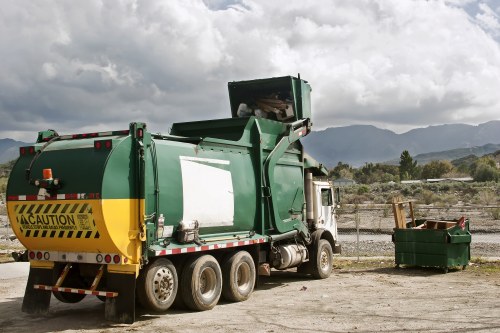
Responsibilities and Legal Compliance
Management retains ultimate responsibility for health and safety while operatives share duties to work safely and report hazards. The company will:- maintain assessed risk controls for common clearance tasks;
- provide appropriate personal protective equipment (PPE);
- ensure safe vehicle loading and secure transport of waste;
- comply with applicable waste, transport and occupational safety regulations.
Risk Assessment and Control Measures
All flat clearance operations are preceded by a dynamic or documented risk assessment to identify site-specific hazards such as sharps, hazardous materials, asbestos suspicion, manual handling risks, and confined spaces. Control measures include safe systems of work, exclusion zones, appropriate signage, mechanical aids for lifting and secure containment for rubbish. Supervisors are responsible for ensuring risk assessments are current and communicated to operatives before work starts.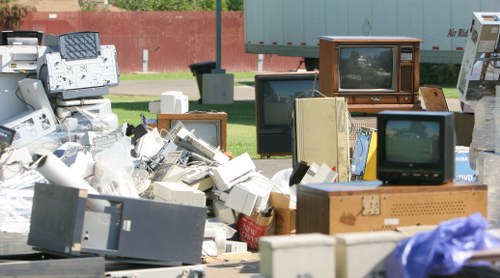
PPE, Training and Competence
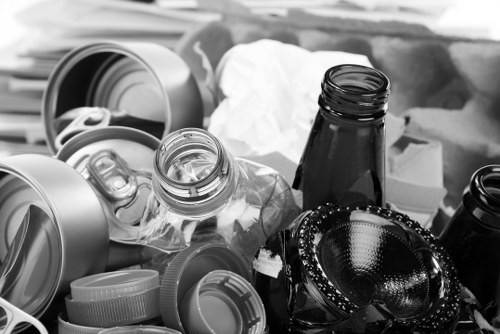
Operatives will be issued with and required to wear suitable PPE, which may include gloves, high-visibility clothing, safety boots, eye protection and respiratory protection where hazards are present. Training covers manual handling techniques, correct use of lifting aids, vehicle loading and securing, basic hazardous waste recognition, and emergency procedures. Competence is verified during induction and through periodic practical assessments; refresher training is scheduled based on operational needs or changes in legislation.Operational Procedures: Standard procedures describe how routine clearance tasks should be performed. These include pre-start vehicle checks, safe positioning of vehicles to protect operatives from traffic, step-by-step handling instructions for bulky items, and segregation protocols to separate recyclable materials from general waste. The aim is to ensure predictable, safe performance across varied sites.
Hazardous Materials and Waste Segregation
When hazardous materials are encountered, work will stop and a competent person will be consulted. Items such as solvents, batteries, aerosols, pesticides, electrical items with suspected faults, and unknown chemical containers require special handling; they will be segregated, secured and transferred to authorised disposal routes. We maintain a clear policy on asbestos suspicion: if suspected, the area will be cordoned off and specialist advice obtained. The company will not knowingly accept controlled or prohibited waste without prior agreement and suitable permits.Incident Reporting and First Aid
All incidents, near misses and property damage are to be reported immediately using the company incident reporting procedure. Prompt reporting enables investigation, corrective action and prevention of recurrence. First aid provisions are maintained on site and in vehicles where appropriate, and trained first aiders are available within the team. Where required, emergency services will be contacted without delay.
Monitoring, Review and Continuous Improvement
Health and safety performance is monitored through regular site audits, toolbox talks and performance reviews. Key performance indicators include incident rates, audit findings and compliance with risk assessments. Management will carry out formal reviews of this policy at least annually and after significant changes to operations or following an incident. Lessons learned will be integrated into training and procedural updates to ensure continuous improvement.Contractor and Public Safety
Contractors and temporary workers engaged in rubbish clearance activities must demonstrate equivalent standards of training and insurance. The company will ensure that all third parties are briefed on site rules, emergency procedures and traffic management where relevant. Public safety is maintained by using clear barriers, signage and controlling access to work areas. Parking, vehicle movement and pedestrian routing are managed to reduce risk to passersby.Record Keeping and Documentation: Accurate records of risk assessments, training, incident reports, waste transfer notes and equipment inspections are maintained to demonstrate compliance and support ongoing risk management. These documents are treated as operational records and form part of the continuous safety improvement process.
Authority and Review: This policy is issued by company management and is effective from the date of issue until superseded. It represents our commitment to safe flat clearance and rubbish removal activities across the service area and will be reviewed regularly to reflect operational changes, regulatory developments and feedback from safety monitoring processes.